Shrimp Yakisoba Recipe
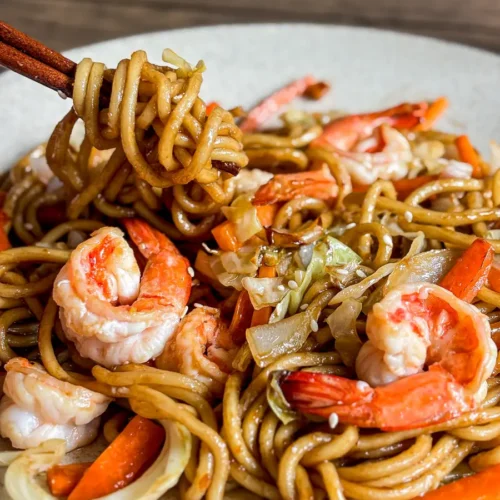
Easy shrimp yakisoba recipe with Japanese stir-fried noodles, garlic, and vegetables, tossed in a tasty homemade sauce. A one-pan dinner ready in just 30 minutes and better than takeout!
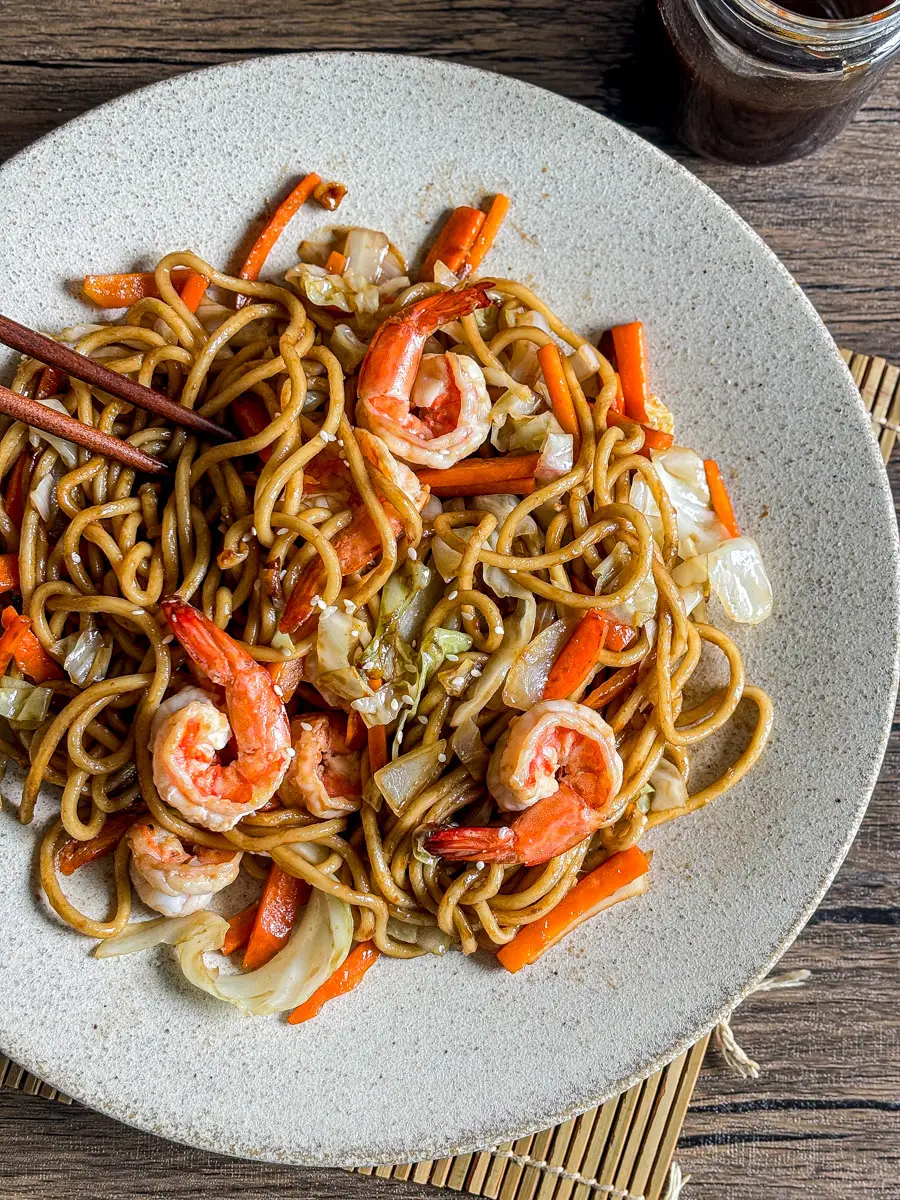
What is shrimp yakisoba?
Shrimp yakisoba is a popular Japanese street food made with wheat noodles, shrimp, garlic, vegetables, and yakisoba sauce. The name translates to “fried noodles,” and the flavor is savory, slightly sweet, and rich in umami.
About this recipe

The smell of garlic hitting the pan, noodles sizzling, and a sauce that coats it all through.
If you’re looking for slurp-worthy noodles with shrimp, this is it!
What you’ll really like about this recipe:
- Works with shrimp, beef, pork belly, or chicken
- Easy to adjust with different vegetables
- One-pan, fast, and low cleanup
- Ready in about 30 minutes
Praew ♡
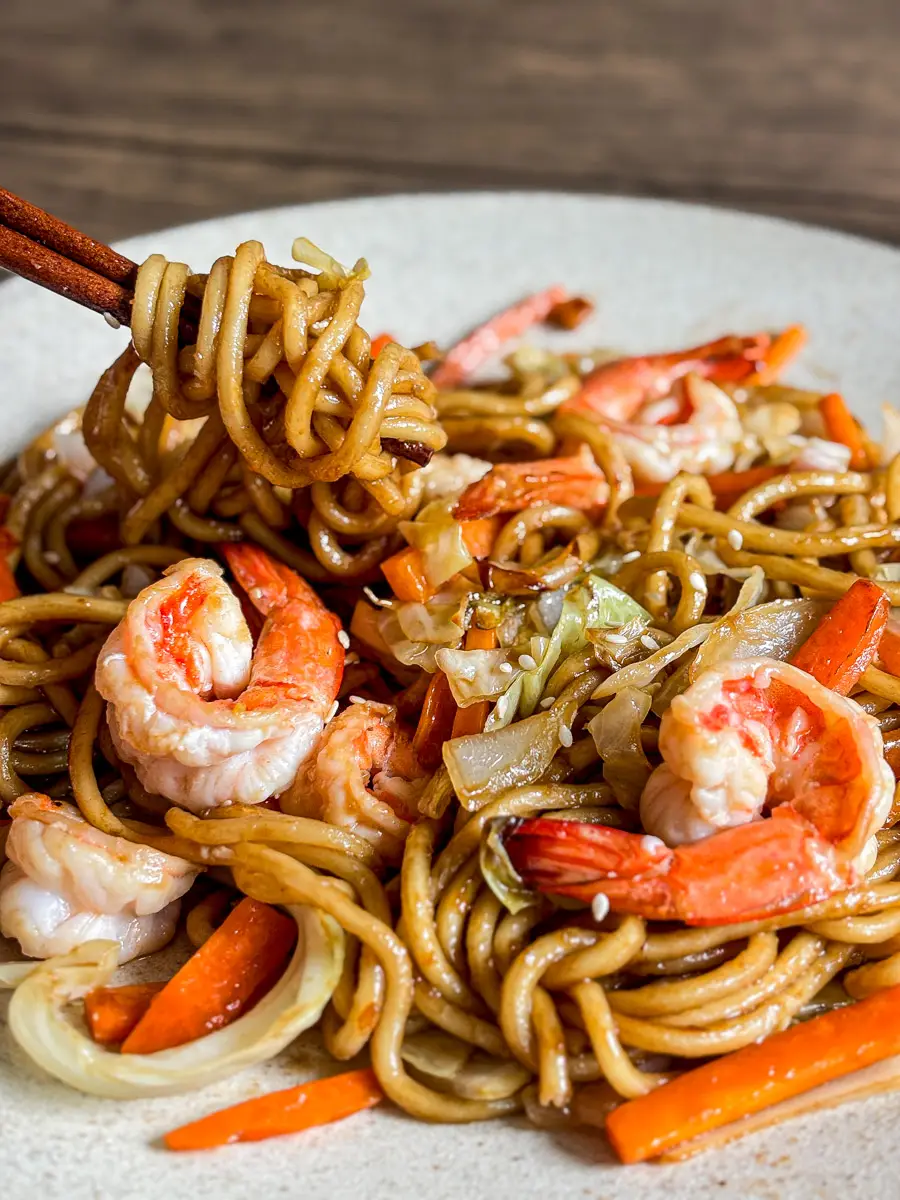
Ingredient tips & substitutes
✱ This section explains each ingredient and its possible substitutions. Full measurements are included in the recipe card later in the post.
- Shrimp Medium or large shrimp work best since they stay juicy and don’t overcook over high heat.
- Yakisoba noodles Wheat-based, ramen-style noodles that are steamed and lightly oiled, which helps them fry instead of sticking. Fresh ramen noodles are the closest substitute.
- Yakisoba sauce Made from soy sauce, Worcestershire sauce, oyster sauce, ketchup, and sugar. You can make it at home or buy it refrigerated at Asian grocery stores.
- Vegetables Cabbage, carrot, and onion add crunch and sweetness, but most stir-fry vegetables (bell peppers, mushrooms, …) work well here.
- Garlic Fresh garlic adds aroma and depth and should hit the pan early for the best flavor.
- Oil Use a neutral, high-heat oil like canola or vegetable oil.
How to make yakisoba shrimp
✱ I always find it easier to follow a recipe when I can see what each step looks like, so I’ve added a quick visual walk-through for you.
- Prep the noodles. Loosen the noodles with your hands. If they’re stiff, rinse briefly under warm water and drain well.
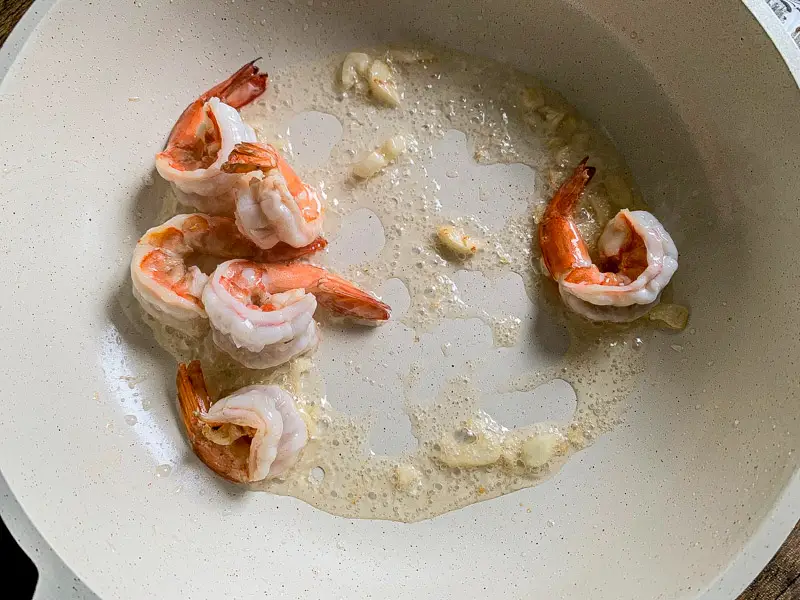
- Cook the shrimp. Heat the oil in a wide pan or wok over medium heat. Add the shrimp and garlic and cook briefly until the shrimp just turn pink. Remove the shrimp from the pan and set aside.
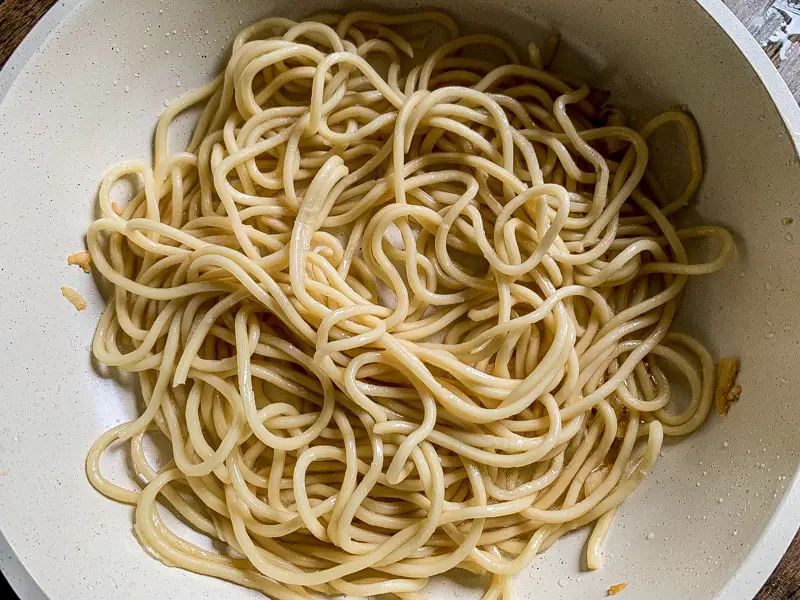
- Stir-fry the noodles. Add the yakisoba noodles to the same pan and toss to loosen them. Let them sit briefly so they fry instead of steam.
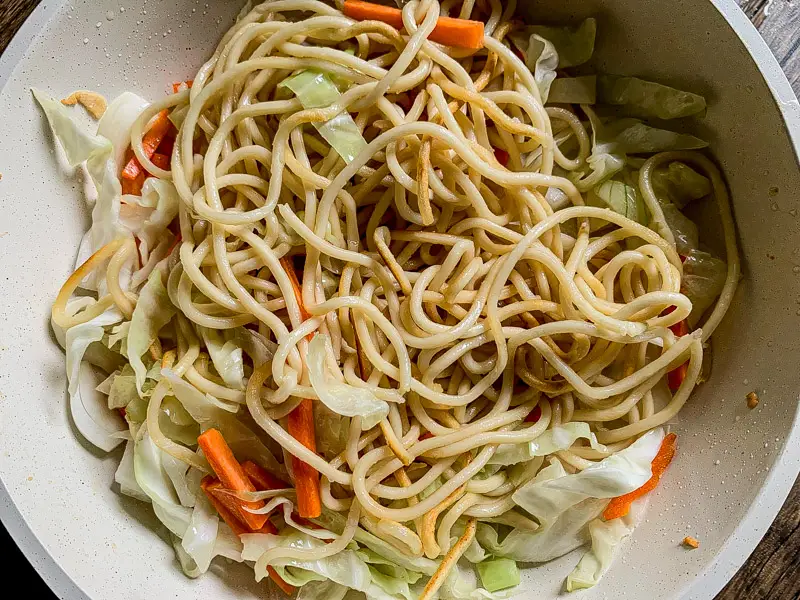
- Add the vegetables. Add the cabbage, carrot, and onion and stir-fry until just tender but still crisp.
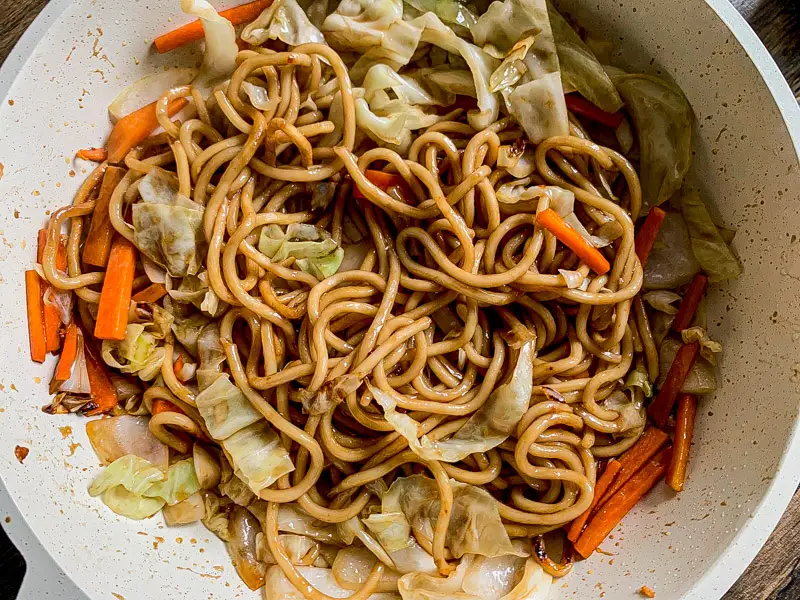
- Add sauce and combine. Pour in the yakisoba sauce and toss everything until the noodles are evenly coated.
- Finish the dish. Return the shrimp to the pan and toss gently just until heated through. Serve immediately.
Serving tip: Yakisoba is often finished with toppings like dried seaweed flakes (aonori), pickled ginger (beni shoga), and a drizzle of Japanese mayo.
Recommended tool
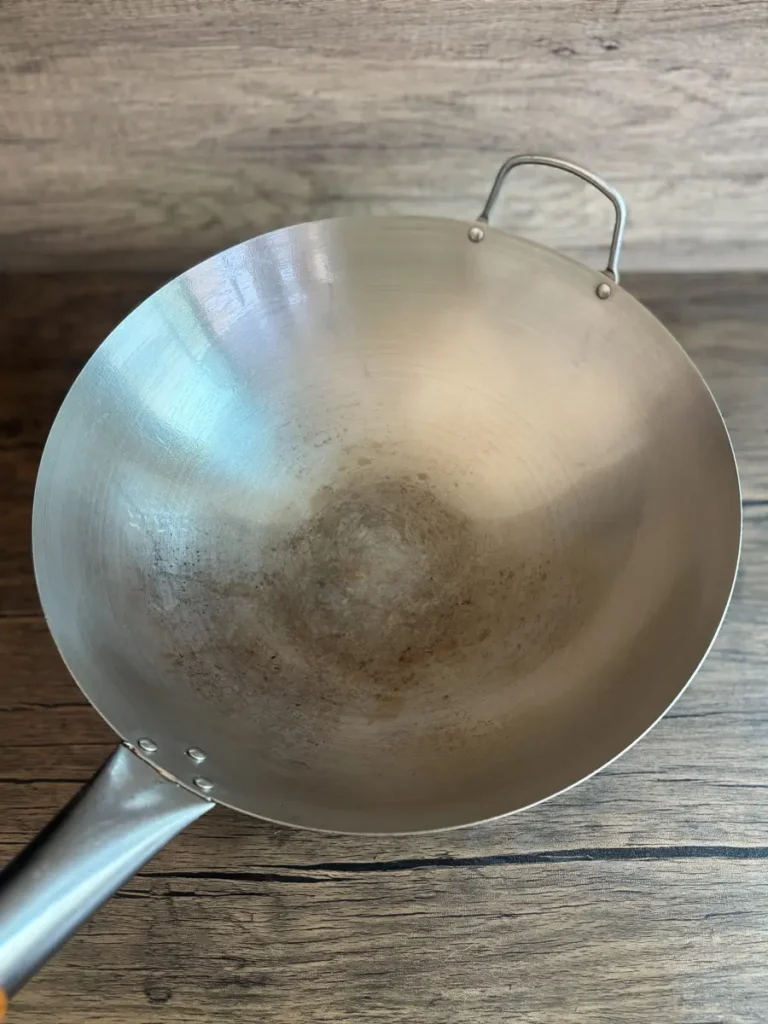
In Japan, yakisoba is traditionally cooked on a teppan (flat iron griddle), especially at street stalls and festivals.
At home, use a wide, heavy pan or wok so the noodles fry instead of steam. More surface area = better browning and less sogginess.
Tips for the best results!
❥ Buy frozen shrimp. They’re usually fresher than “fresh” shrimp at the store and easy to keep on hand.
❥ Don’t overcrowd the pan. High heat keeps the noodles from turning soft and lets the sauce cling properly.
❥ Pat the shrimp dry. This helps them sear instead of steaming in the pan.
🍴 More Asian shrimp recipes to try
Shrimp Yakisoba Recipe
Equipment
- Measuring spoons
- Cutting board and knife
- Wok or large frying pan
- Tongs or spatula
Ingredients
- 2 tbsp oil
- 8 shrimp peeled and deveined
- 1 clove garlic finely minced
- 180 g yakisoba noodles
- 70 g cabbage thinly sliced
- 40 g carrot julienned or thinly sliced
- ¼ onion thinly sliced
- 3½ tbsp yakisoba sauce
Instructions
- Prep the noodles. Loosen the noodles with your hands. If they’re stiff, rinse briefly under warm water and drain well.
- Cook the shrimp. Heat the oil in a wide pan or wok over medium heat. Add the shrimp and garlic and cook briefly until the shrimp just turn pink. Remove the shrimp from the pan and set aside.
- Stir-fry the noodles. Add the yakisoba noodles to the same pan and toss to loosen them. Let them sit briefly so they fry instead of steam.
- Add the vegetables. Add the cabbage, carrot, and onion and stir-fry until just tender but still crisp.
- Add sauce and combine. Pour in the yakisoba sauce and toss everything until the noodles are evenly coated.
- Finish the dish. Return the shrimp to the pan and toss gently just until heated through. Serve immediately.
Notes
- Nutrition information is provided as a courtesy and should be considered approximate.
Frequently asked questions
What noodles can I use if I can’t find yakisoba noodles?
Fresh ramen noodles are the closest substitute. Avoid dried ramen for this recipe.
Can I prep this ahead of time?
You can prep the vegetables and sauce in advance, but stir-fry just before serving for the best texture.
Freezing & storage
Refrigerate
Store cooled leftovers in an airtight container in the fridge for up to 2 days.
Freeze
Freezing isn’t recommended, as the noodles soften and lose texture once thawed.
Reheat
Reheat in a hot pan with a small splash of water or oil, stirring until heated through.